Most EV chargers at home run on a 240-volt breaker that serves nothing else, and the job usually needs a permit and inspection. The electrician looks at how much load the house already carries, especially the AC, before sizing the circuit. Call the number on this page to be connected with a local electrician in Buckeye.
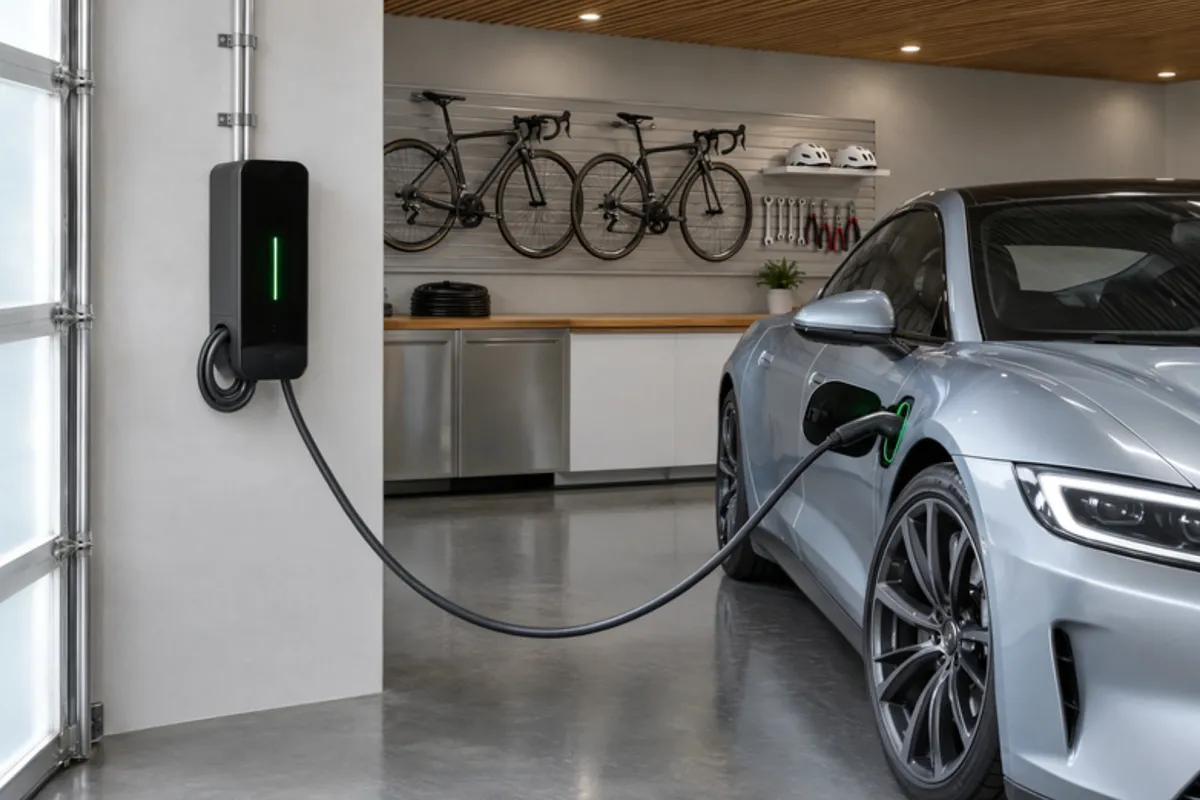
Level 1, Level 2 and what changes at home
For a Buckeye household, the cord that comes with most EVs plugs into a regular 120-volt outlet and adds range slowly. Level 2 uses 240 volts, like a dryer or an AC condenser, and refills the battery in a night. That is the setup electricians usually install, and it is why a new circuit is part of the job.
Older panels and newer panels
Homes with 100-amp service or an aging panel often need an upgrade before a charger fits. Newer master-planned subdivisions usually have 200-amp service, yet a big AC, a pool pump and a charger together can still crowd it. The electrician reads the panel label and the actual load, not just the house age.
Newer subdivisions like these often have EV-friendly garages and open panel space, though an electrician still checks the load calculation, especially with a big AC unit.
What shapes the price
- Distance from the panel to the charger spot
- Whether the panel has room or needs work
- Hardwired unit or plug-in receptacle
- Outdoor mounting and conduit
- Permit and inspection
Each one can move the total, so a written quote after a site look is the reliable way to compare.
Useful local contacts for Buckeye
Your electric bill names the utility that serves the house. That company handles outages, meters and lines on the street side; an electrician handles everything past the meter.
Safety comes first: a burning smell, smoke or sparks from wiring means leave the house and call 911. A downed line is the utility's job, never an electrician's; keep 100 feet back, call 911 and then report it to the utility.
Electrical permits and inspections here, so ask whether your job needs one and who will pull it.
Ask for the contractor's ROC number and look it up on the Arizona Registrar of Contractors search before work begins. Residential electrical is the R-11 class; CR-11 covers both residential and commercial.
Service upgrades need the utility as well as the city or county: the utility disconnects and reconnects power and decides where the meter goes.
Nearby, the same kind of help is available in Goodyear, Waddell and Litchfield Park.
Permit, inspection and sign-off
Charger installs in Buckeye usually need a permit and inspection. The contractor normally files the permit and schedules the inspector, who confirms the wire, breaker and mounting meet the electrical code. Keep the final sign-off with your home records, since insurers and future buyers sometimes ask for it.
Safety around EV charging
Never charge from an ordinary extension cord, and never from an outlet that feels warm or smells hot. If a plug, outlet or charger shows scorching, smoke or sparks, get everyone out and call 911 before anything else. Chargers are safe on properly sized circuits; trouble starts with improvised wiring.
EV Charger Installation questions in Buckeye
Can my panel handle an EV charger?
Can I plug my EV into a regular outlet?
Can two EVs share one circuit?
Does rooftop solar affect a charger install?
More electrical services in Buckeye
EV Charger Installation nearby
Helpful guides
Sources
Last updated: